About
- About
Birth Identity
Born as Jabra Pahadia, he later came to be known as Tilka Manjhi. His birth name reflects his deep roots in the indigenous Pahadia tribal community.
Tribal Heritage
He belonged to the forest-dwelling tribal communities of eastern India, where identity, land, and culture were inseparable from nature.
Birthplace Region
Born in the hilly and forested regions of present-day Bihar–Jharkhand, an area rich in tribal traditions, sacred groves, and ancestral lands.
Forest Childhood
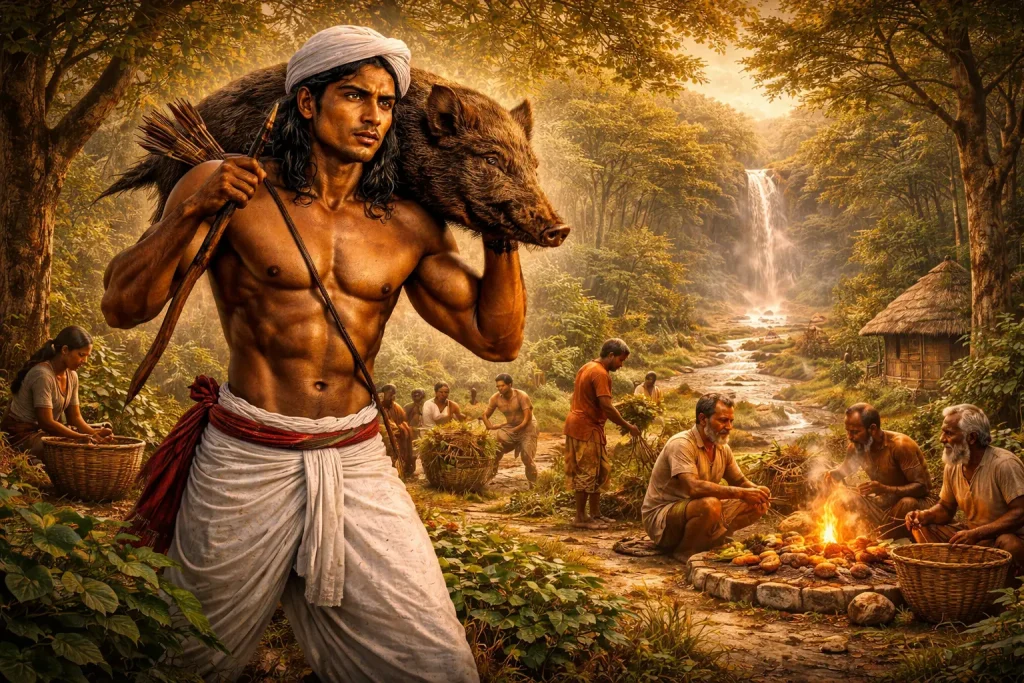
His childhood was shaped by dense forests, rivers, hills, and village life—where survival skills, hunting, and traditional practices were learned from an early age.
Cultural Upbringing
He was raised within a strong community system guided by elders, village councils, and oral traditions that emphasized courage, justice, and unity.
Formation of Character
Living close to nature and witnessing early injustices against tribal communities helped shape his strong sense of independence, fairness, and resistance.
Santhal Tribal Heritage
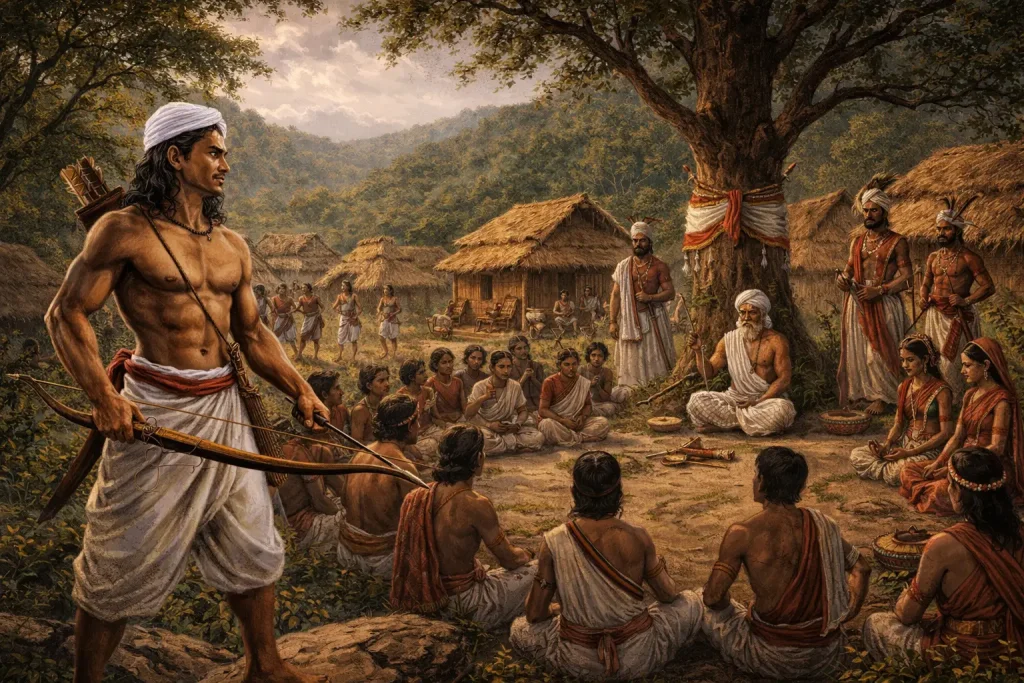
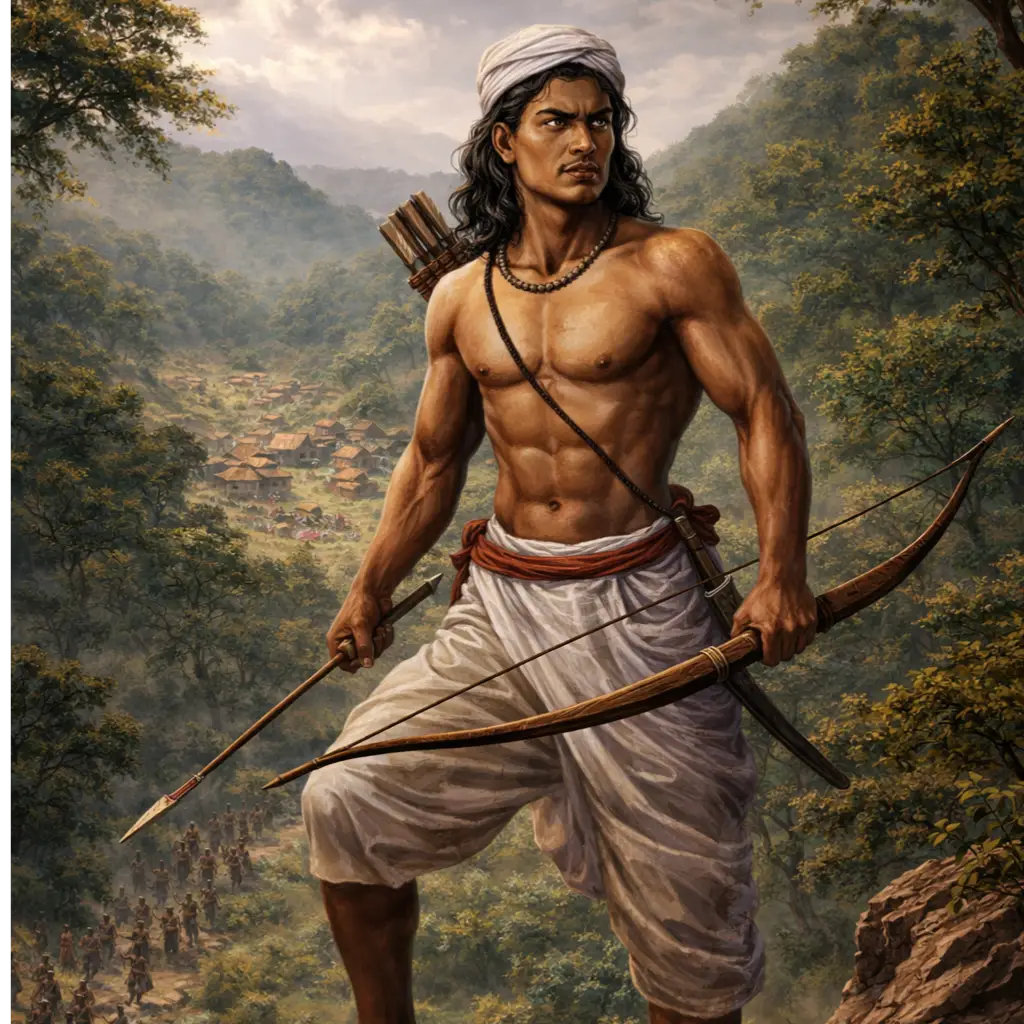
Tilka Manjhi belonged to the Santhal–Pahadia tribal tradition, a community deeply connected to forests, rivers, and ancestral land. For the Santhal people, nature was not merely a resource—it was sacred, sustaining both livelihood and identity. Their social structure was community-centered, guided by village councils, elders, and customary laws that ensured harmony and collective responsibility.
Clan and community structure
This deeply rooted social framework fostered cooperation, discipline, and mutual protection—values that later became central to Tilka Manjhi’s leadership and resistance movement. The clan and community system was not only administrative; it was the backbone of Santhal identity and survival.
Cultural practices governance
This system of self-governance nurtured independence, accountability, and mutual respect—principles that later influenced Tilka Manjhi’s leadership in organizing resistance against colonial authority. Cultural practices were not merely rituals; they were the foundation of identity, justice, and autonomy.
Role of forests in livelihood
This intimate bond with the forest shaped Tilka Manjhi’s worldview. Protecting the land meant protecting culture, dignity, and existence itself. When colonial policies threatened forest rights and tribal autonomy, resistance became not only political—but a defense of identity and ancestral heritage.
Rise as a Tribal Leader
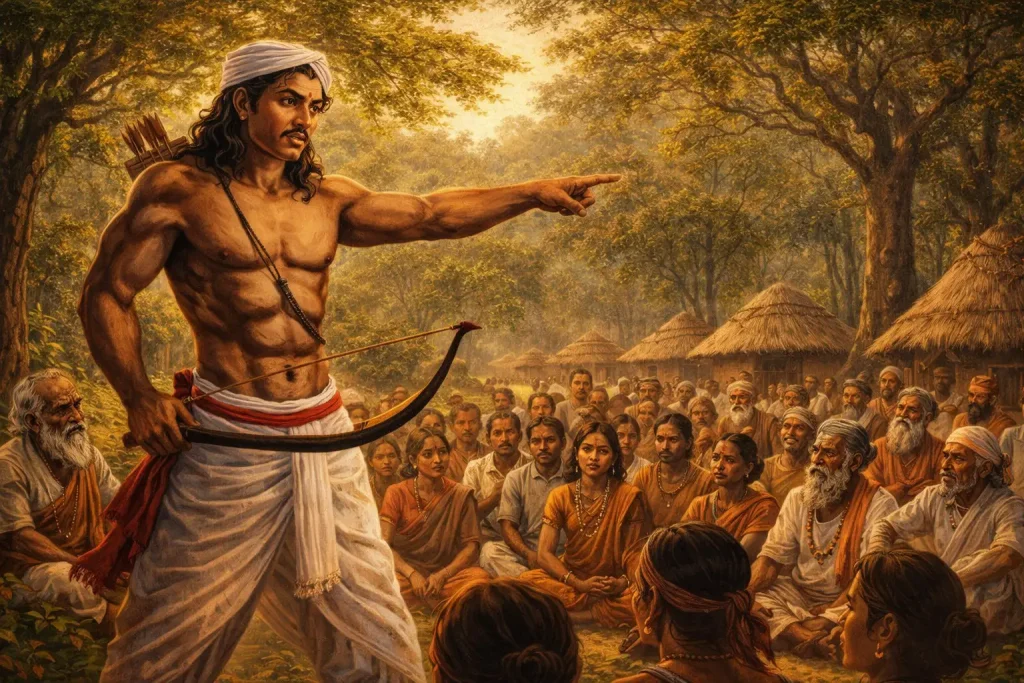
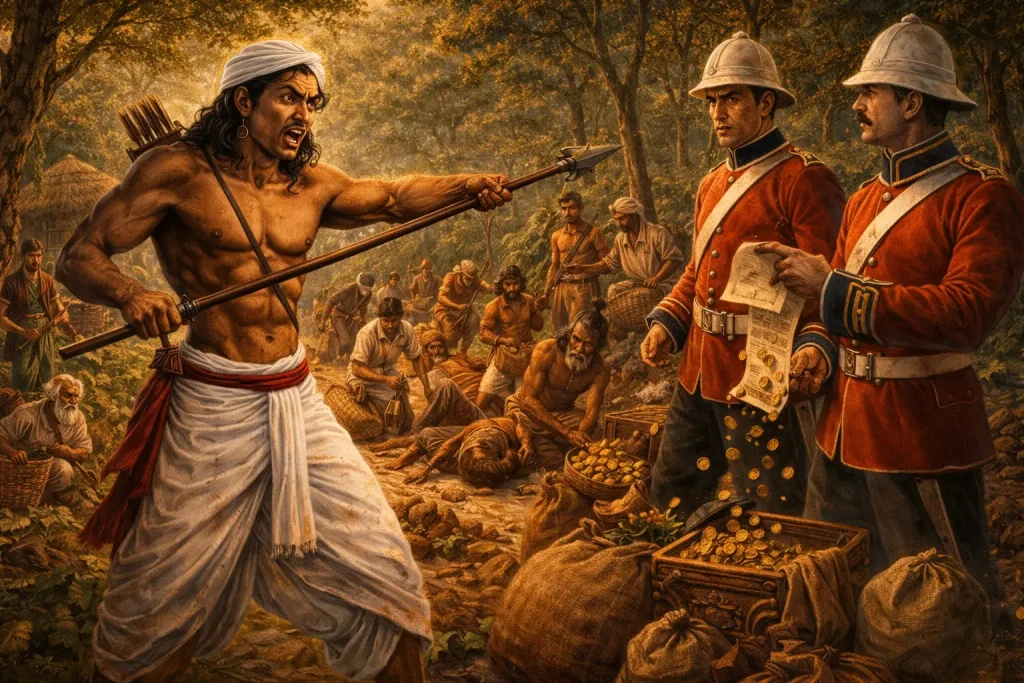
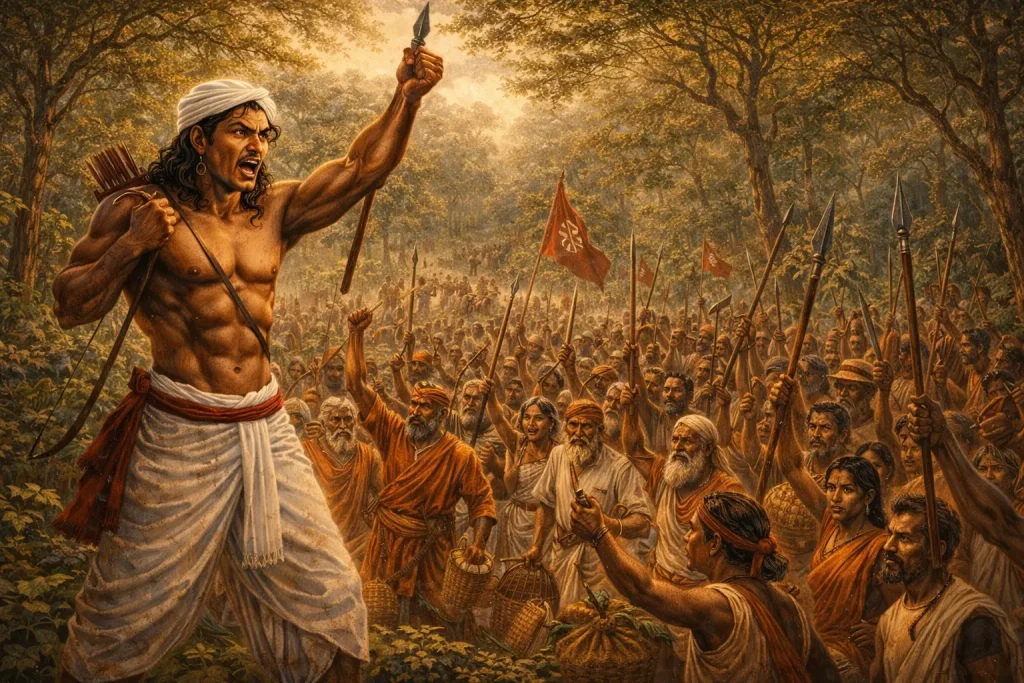
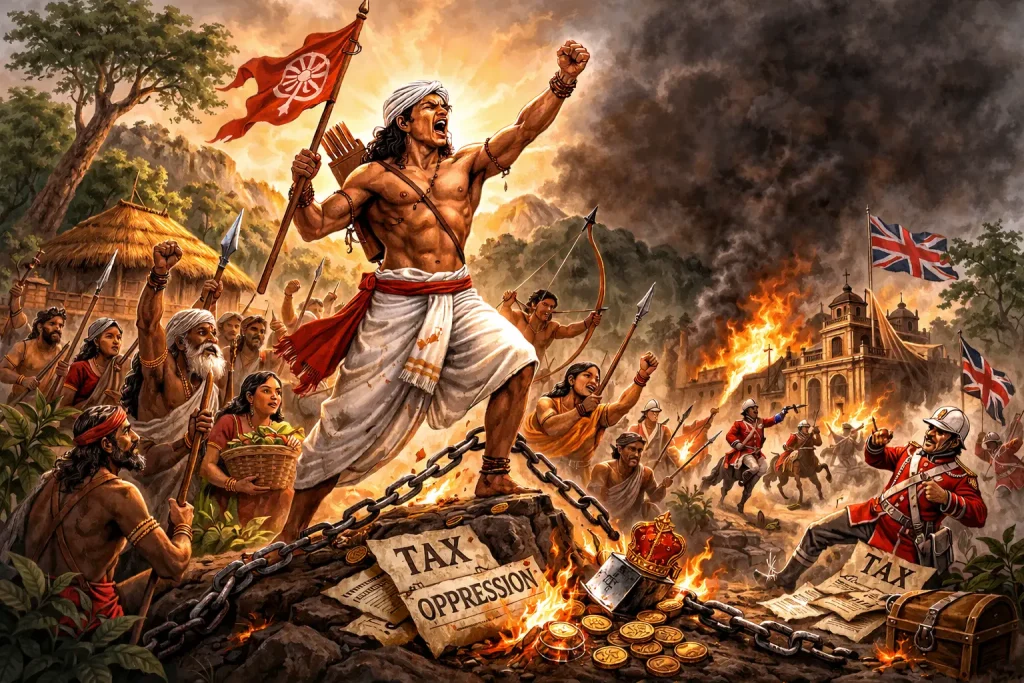
Tilka Manjhi emerged as a powerful tribal leader during a time of growing unrest among the Santhal people in the late 18th century. Witnessing exploitation by British colonial officials and oppressive revenue systems imposed on tribal lands, he began mobilizing local communities to resist injustice.
British revenue oppression
exploitation
This deeply rooted social framework fostered cooperation, discipline, and mutual protection—values that later became central to Tilka Manjhi’s leadership and resistance movement.
Mobilization of Santhal and
Pahadia
Tilka Manjhi united Santhal and Pahadia villages under a shared cause of protecting land and dignity.Through forest gatherings and clan networks, he transformed scattered unrest into organized resistance against British rule.
Emergence a resistance
organizer
As British revenue policies tightened control over tribal lands and disrupted traditional forest rights, unrest began to grow among the Santhal and Pahadia communities.
Personality & Leadership Traits
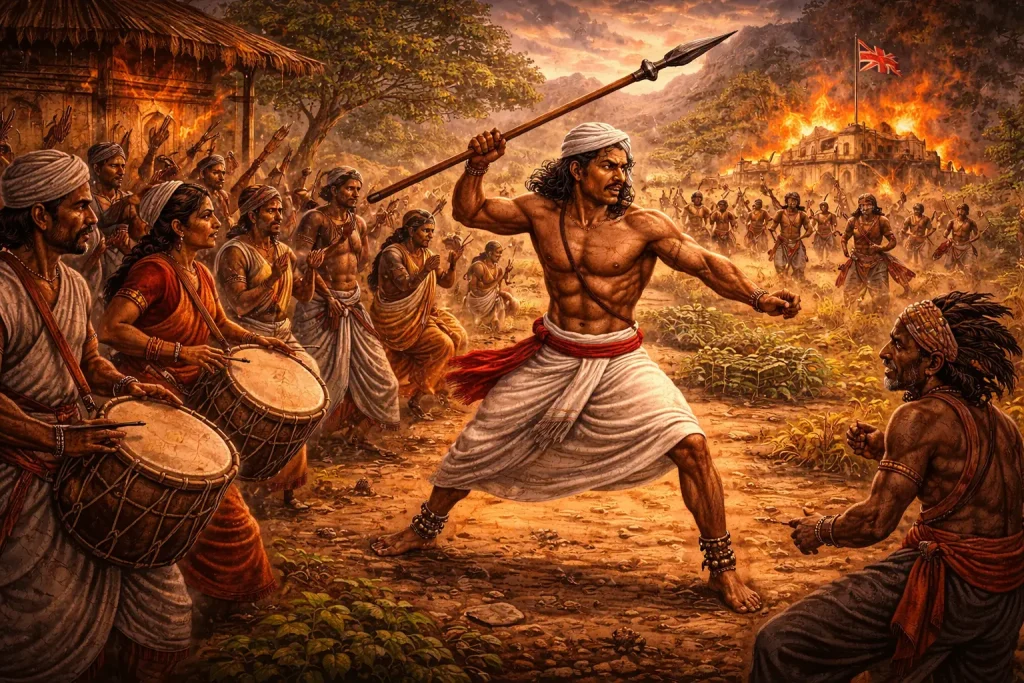
Tilka Manjhi was known for his fearless spirit and unwavering commitment to justice. He possessed a rare combination of physical bravery and strategic thinking, enabling him to organize resistance in challenging forest terrains against a powerful colonial force. His confidence inspired trust among the Santhal and Pahadia communities, who saw in him both a protector and a guiding force.
Fearless and Strategic
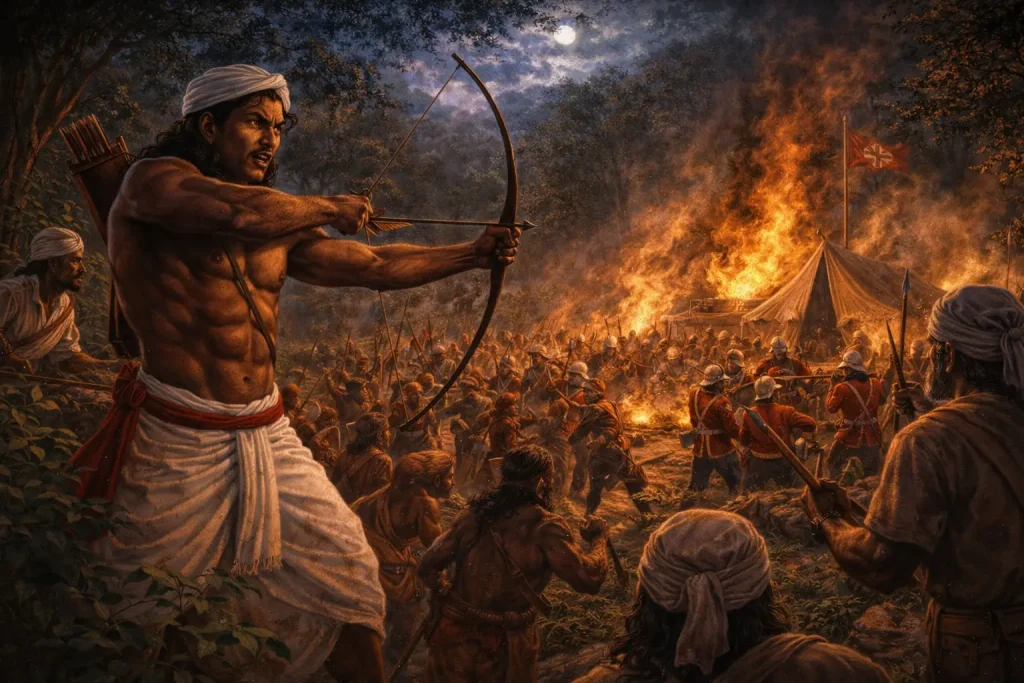
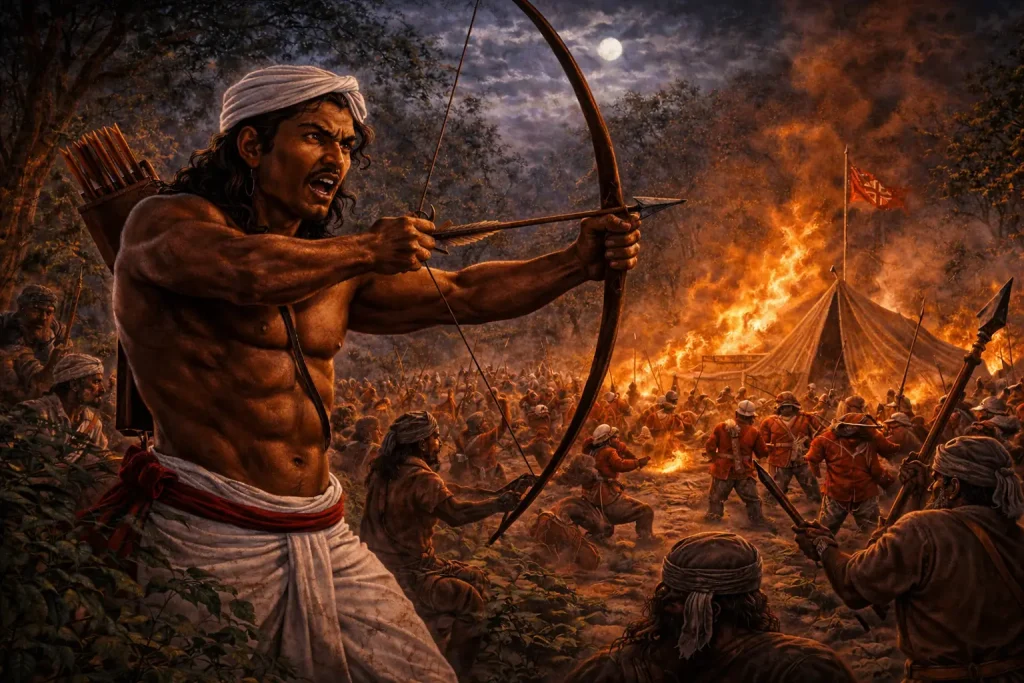
Tilka Manjhi combined physical courage with sharp strategic thinking. He used forest terrain, surprise tactics, and organized planning to challenge a far stronger colonial force.
Deep Connection with Tribal Traditions
Rooted in Santhal culture, he respected ancestral customs, sacred forests, and community governance. His leadership reflected traditional values of unity, honor, and collective responsibility.
Strong Sense of Justice
He believed in self-rule and the protection of tribal dignity. His resistance was driven not by ambition, but by a powerful commitment to fairness, autonomy, and freedom from oppression.